
Science‑Backed Advantages of Using a Paper Planner vs. Digital Screens
- Luna Red
- Aug 25, 2025
- 2 min read

Updated: Oct 19, 2025
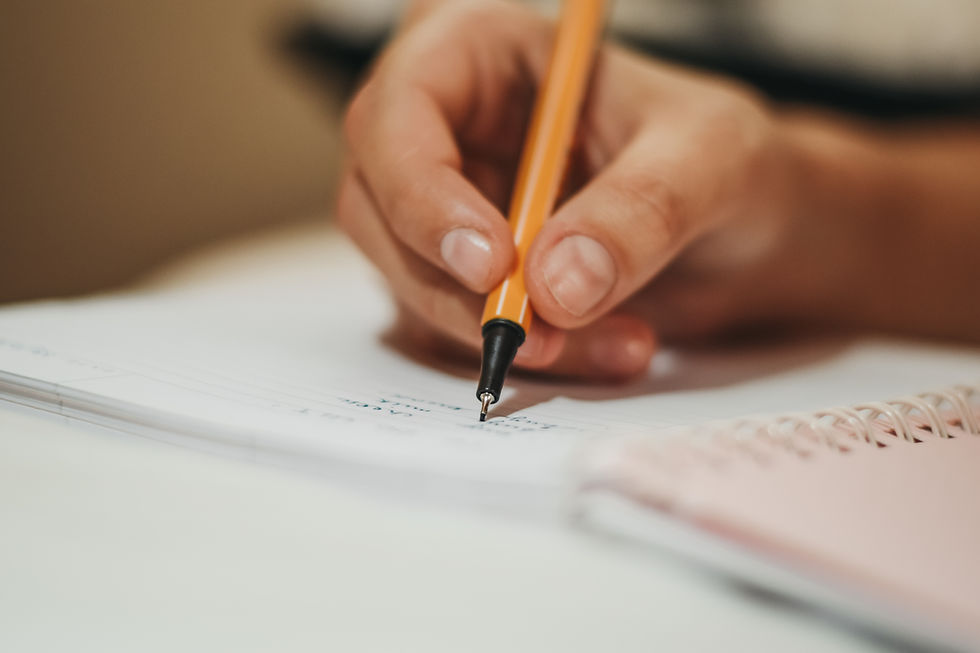
1. Fewer Distractions
Science insight: Digital planners inherently expose you to notifications and multitasking temptations, reducing focus and comprehension. A Princeton–UCLA study found that even the mere presence of a visible screen can degrade comprehension by about 17 % compared to distraction‑free environments.
2. Better Memory & Focus
Handwriting memory boost: Multiple studies show handwriting engages richer neural activity than typing, strengthening memory retention. For example, Mueller & Oppenheimer (2014) found that students taking handwritten notes performed better on conceptual understanding tests compared to those typing Spell WriteFireflies.ai.
Neuroscience evidence: Common brain regions for motion, vision, and memory light up during handwriting—something not seen when typing. This deeper “encoding” enhances comprehension and learning Scientific AmericanNational Geographic.
3. Mental Clarity
Cognitive engagement: Handwriting demands slow, thoughtful processing, helping organize thoughts more clearly and encouraging active synthesis of ideas—beyond passive transcription Scientific AmericanFireflies.ai.
4. Increased Mindfulness
Metacognitive benefit: Writing by hand promotes reflection and self-awareness about one’s thinking process—also known as metacognition—enabling better goal setting, monitoring, and evaluation of tasks Wikipedia.
5. Customization & Creativity
Creative neural activation: Handwriting, especially in cursive or personalized styles, stimulates more of the brain’s motor, visual, and language centers—all key to creative thinking and idea formation PMCScientific American.
6. Better for Deep Work
Superior neural connectivity: Research from NTNU shows handwriting generates more elaborate brain connectivity patterns critical for memory formation and deep engagement—more so than typing Psychiatrist.comScientific American.
7. Eye Health & Reduced Screen Time
Digital fatigue avoided: Paper planners eliminate screen glare, helping reduce eye strain. Digital planner distractions—notably screen notifications—also decrease productivity and increase cognitive load.
8. Permanent Record
Tactile memory cues: The physical layout of a paper planner—including where you wrote things, doodles in the margin, etc.—acts as a spatial memory aid. Users often recall information by visualizing its location on the page—something digital notes don’t replicate Stack Overflow Blog.
9. Satisfying & Rewarding
Therapeutic and cognitive rewards: Writing and even simple doodles can reduce stress and enhance emotional clarity. This tactile, sensory act is more emotionally engaging and grounding than clicking a checkbox on-screen oslash.comSELF.
This offering was created as part of the Grace Cocoon Healing Movement — a path that weaves love, presence, and nervous system wisdom into the art of living.Learn more in:


Comments